

Science
Every Springdalite a Thriving Scientist
The Primary Science Syllabus aims to nurture students who are curious about the world around them, equipped with scientific knowledge and inquiry skills, and able to apply science responsibly in everyday life. In line with these aims, our Science curriculum provides students with opportunities to:
-
Build curiosity and sustain interest in science and the environment
-
Acquire and apply scientific concepts to understand the natural and physical world
-
Develop inquiry skills, critical thinking and positive learning dispositions
-
Make informed and responsible decisions using scientific knowledge
-
Appreciate the impact of science and technology on people, society and the environment
Guided by the Ministry of Education’s Science Curriculum Framework, our Science programme develops scientifically literate learners who inquire like scientists, think critically and apply science meaningfully in authentic contexts.
Department Philosophy
We nurture curious minds who inquire, think critically and apply science responsibly in the world around them.
Progression of Science Inquiry and Application (Primary 3–6)
Science learning is designed as a coherent progression, where students move from guided inquiry to confident application of scientific knowledge and skills.
-
Primary 3 – Guided inquiry through observations and simple investigations
-
Primary 4 – Structured inquiry and application through Science Projects
-
Primary 5 – Applied inquiry and design through STEM challenges and competitions
-
Primary 6 – Synthesis of scientific understanding and readiness for secondary science learning
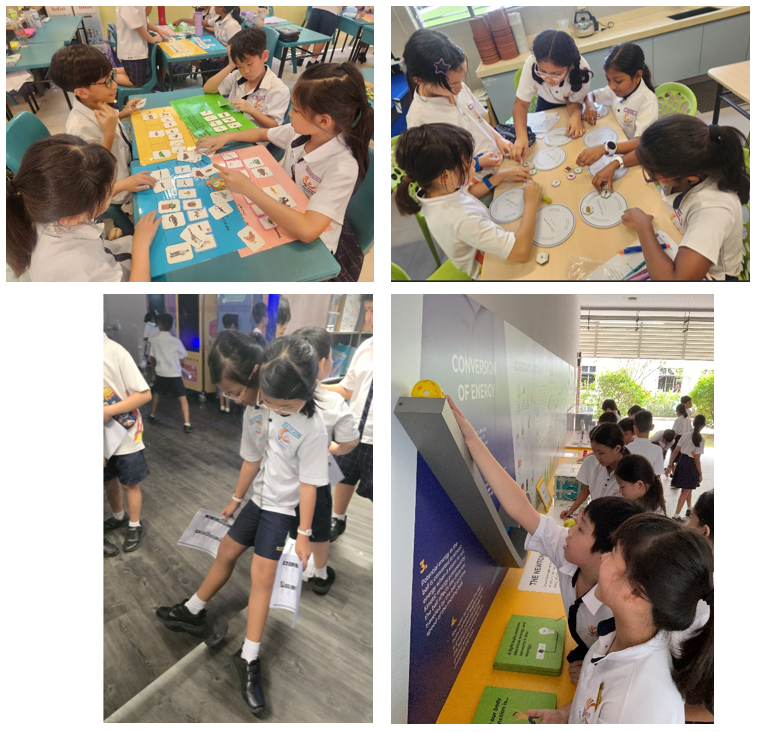
Programmes Supporting Science Learning
1. Learning Alive! – AR-Enhanced Scientific Inquiry
Augmented Reality (AR) enriches inquiry-based learning by enabling students to visualise abstract scientific phenomena and processes that may not be easily observed in real-life settings. Through immersive and interactive experiences, students are encouraged to ask questions, investigate concepts and construct understanding.
Learning is scaffolded using the QIMS framework – Questioning, Investigating, Making and Synthesising, which supports the development of inquiry skills and scientific thinking. Through AR-enhanced inquiry packages, students engage more deeply with scientific concepts while making meaningful connections to real-world contexts.
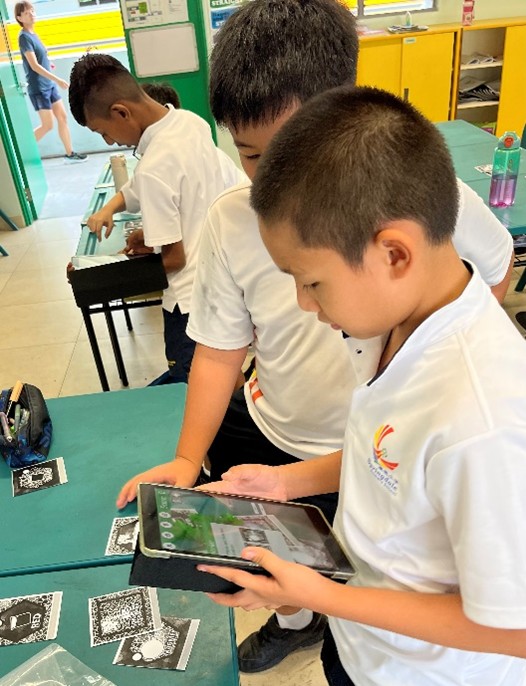
Students exploring science concepts through AR-enhanced lessons
2. Science in the Real World
Science in the Real World learning experiences help students see the relevance of science in their daily lives. Through authentic scenarios and applied tasks, students use scientific concepts and skills to explain phenomena, solve problems and make informed decisions, strengthening their understanding of how science influences everyday life.
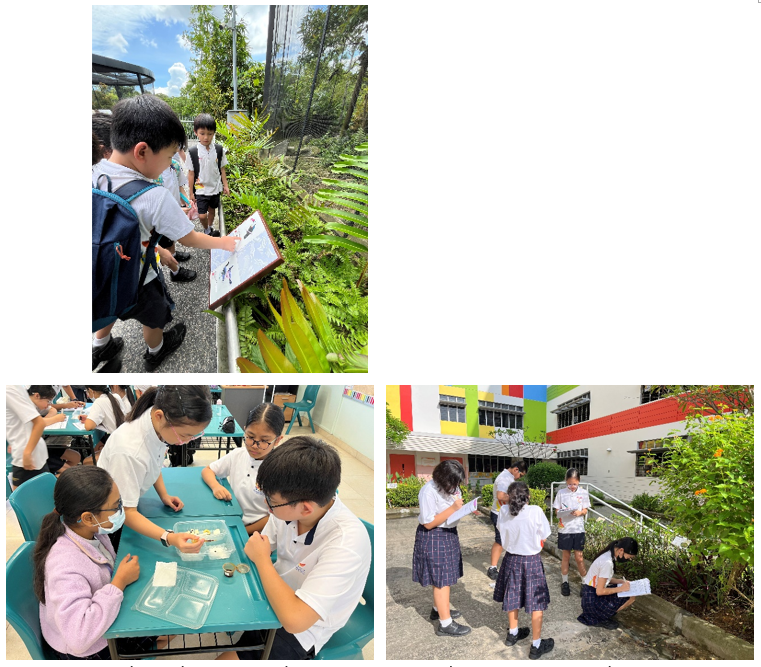
Springdalites connecting classroom learning to real-world science
3. STEM Learning Experiences
Our STEM Learning Experiences adopt a fun, creative and hands-on approach to deepen students’ understanding of Science through interdisciplinary learning. These experiences encourage students to apply scientific concepts, develop problem-solving skills and work collaboratively in authentic contexts.
Students participate in:
-
In-curriculum performance tasks, which involve tinkering and design challenges integrating Science, Technology, Engineering and Mathematics (STEM) learning in our Makerspace.
-
Science Projects at Primary 3 and Primary 4, where students apply scientific concepts and inquiry skills to investigate questions, design solutions and communicate their findings. These projects provide opportunities for students to experience the processes of scientific inquiry in a structured and meaningful manner.
-
STEM Playground Challenges, designed for whole-school participation, where students engage in bite-sized, hands-on challenges that promote curiosity, creativity and collaborative problem-solving.
-
Singapore Amazing Flying Machine Competition (SAFMC), open to selected Primary 5 and 6 students, where students apply scientific principles, engineering design and iterative testing to design and optimise flying machines.
Through these experiences, students develop confidence in applying scientific knowledge while strengthening 21st century competencies such as collaboration, creativity and perseverance.
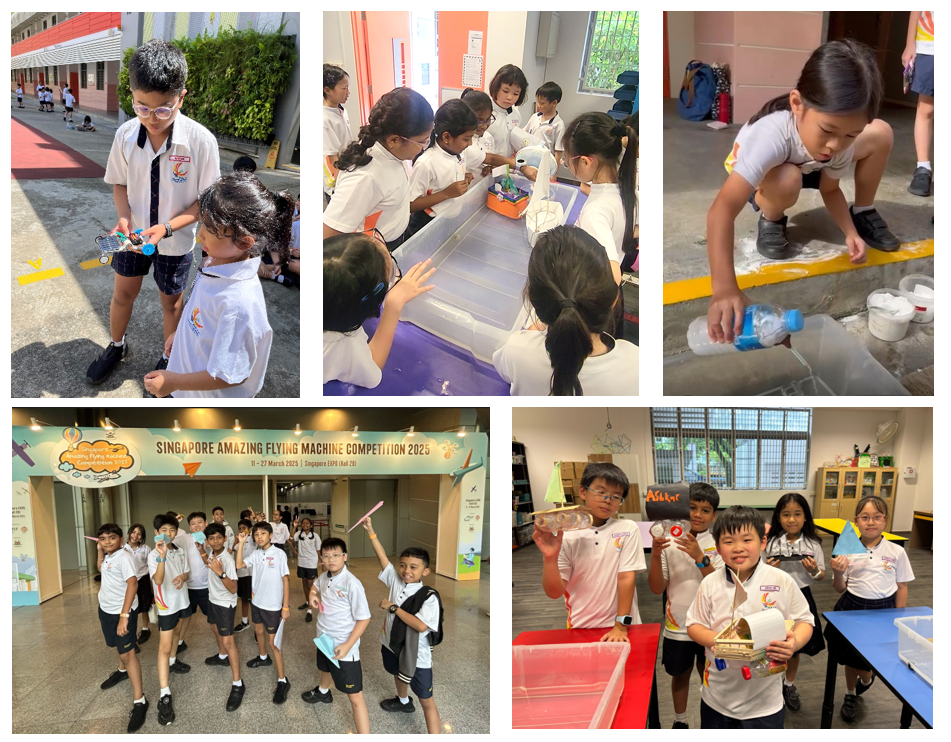
STEM learning opportunities for Springdalites across all levels
4. Enrichment and Talent Development
Our enrichment programmes provide opportunities for students to extend and deepen their interest in Science beyond the core curriculum. Through engaging and challenging experiences, students further develop inquiry skills, scientific reasoning and higher-order thinking.
Selected Primary 4 and 5 students are invited to participate in the Excellence 2000 (E2K) Programme and Science Olympiad Training Workshops, which stretch students to think deeply and apply scientific concepts creatively.
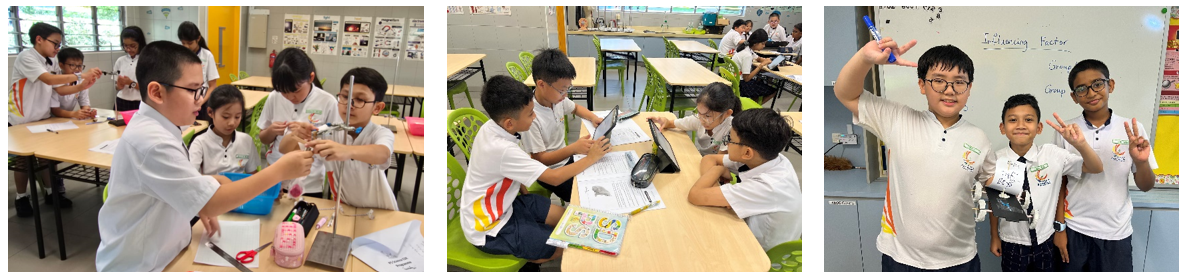
E2K students deepening scientific concepts and inquiry skills through hands-on experiments and collaborative learning
5. Science X-perience Week
Science X-perience Week is a signature event that celebrates students’ learning and passion for Science. Students showcase their experiments, designs and STEM projects through activities such as science busking, toy design challenges, show-and-tell competitions and demonstrations.
Outstanding teams from the science busking segment are invited to represent the school in the Singapore Science Buskers Competition organised by Science Centre Singapore.
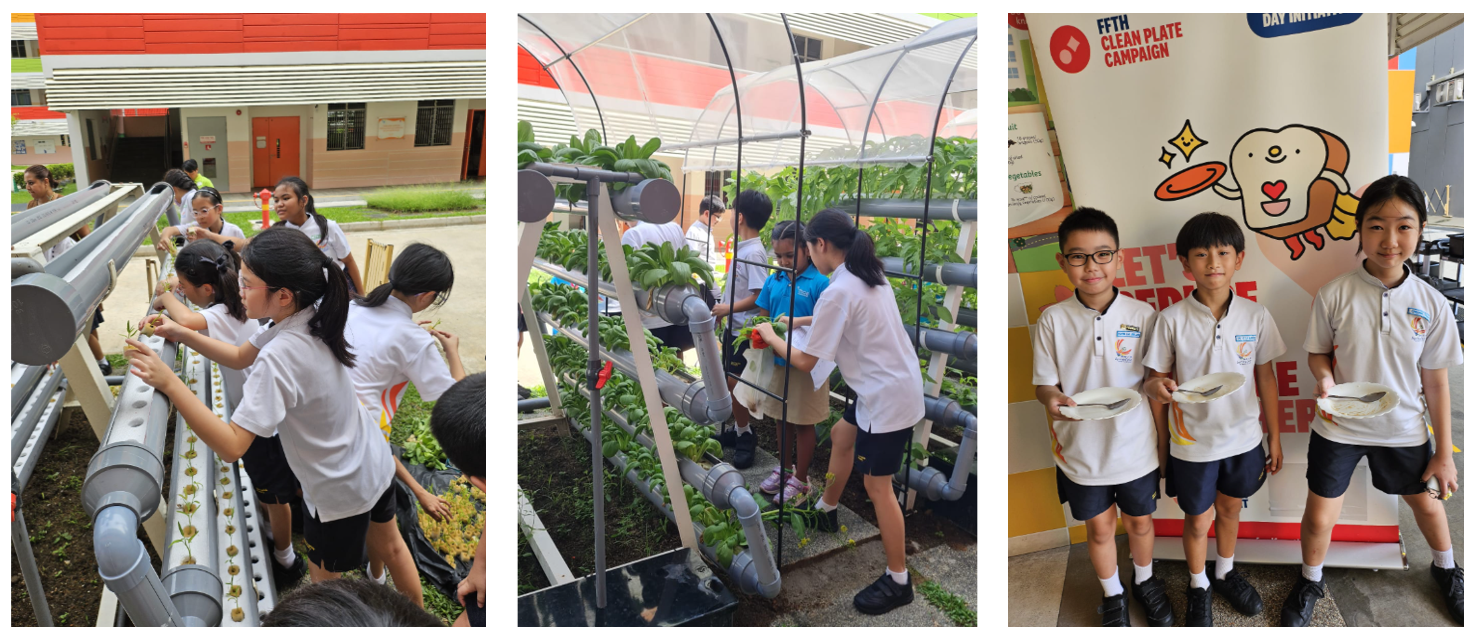
Science busking during recesses to showcase scientific concepts
6. Eco-Stewardship and Environmental Education
Eco-stewardship and environmental education are integral to our Science programme, as we nurture students to become environmentally responsible and informed citizens. Through purposeful learning experiences, students develop an understanding of environmental issues and learn to apply scientific knowledge to make responsible choices for a sustainable future.
Students participate in a range of eco-stewardship initiatives, including:
-
Hydroponics Planting for Food Sustainability, where students learn about plant systems, resource management and sustainable food production. Through hands-on experiences, students understand how factors such as water, nutrients and light affect plant growth. These experiences are extended through farm-to-table learning, where students harvest produce and reflect on food sources, reducing food wastage and making informed choices about consumption.
-
Recycling in Every Classroom, which provides authentic opportunities for students to practise environmental responsibility in their daily routines. By sorting and recycling materials regularly, students develop awareness of waste management and cultivate sustainable habits that contribute to environmental conservation.
-
Upcycling and Environmental Campaigns, which encourage students to apply creativity and scientific understanding to repurpose materials and advocate eco-friendly practices.
-
Clean Plate Campaign, which raises awareness of food wastage and promotes responsible consumption habits.
Environmental education is also embedded in Values-in-Action (VIA) programmes across levels, providing platforms for students to apply scientific understanding, express their ideas and take action in caring for the environment. Through these experiences, students develop a sense of ownership, responsibility and care for the world around them.
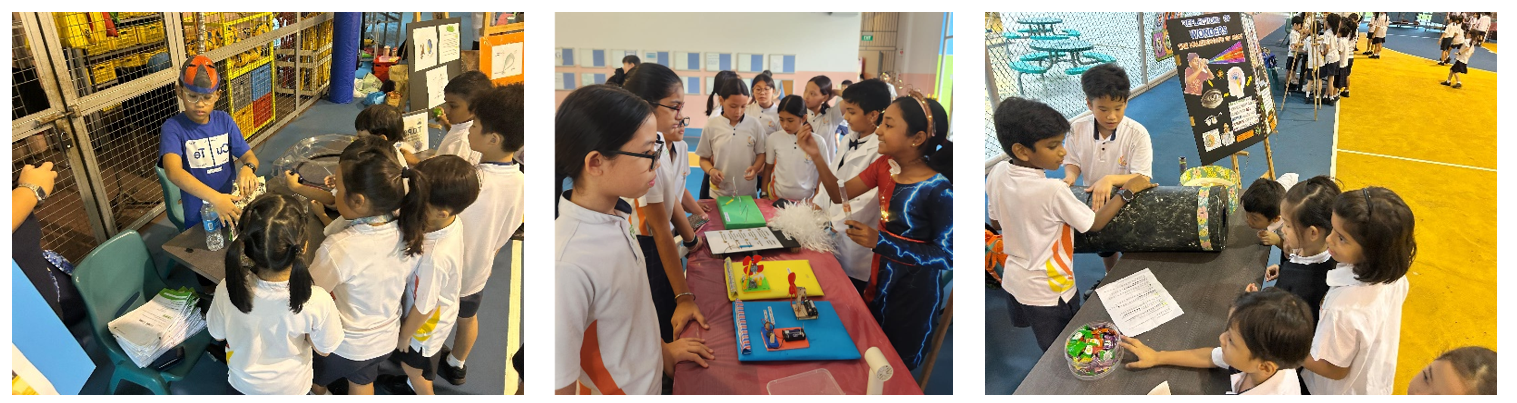
Springdalites learn, practise and advocate for environmental care through hands-on experiences