

Mathematics
Mathematics Department
Where Mathematical thinkers thrive and make a difference
OUR CURRICULUM
Springdale Primary School adopts the 2021 Mathematics syllabus which reflects
the recent development and trends in mathematics education. We emphasize
on conceptual understanding, skill, proficiencies and mathematical processes,
reasoning and communications which are integral to the development of mathematical
problem-solving ability to think logically, abstractly, critically and
creatively. The central focus of MOE’s Mathematics Framework is mathematical
problem solving. This sets the direction for and provides guidance for
the Mathematics Department in the teaching and learning, and the assessment
of mathematics.
OUR APPROACH
CPA Approach
Teaching and learning are intentionally designed using the Concrete–Pictorial–Abstract
(CPA) progression. Students explore concepts through hands-on activities
(e.g. using counters or place-value discs), represent ideas visually (e.g.
bar models, drawings), and eventually apply concepts using numbers and
symbols. This structured progression supports deep understanding and builds
confidence in problem-solving.
Real-World Applications
Teaching and learning are intentionally designed to connect mathematics
to students’ daily lives and community contexts (e.g. using money in canteen
purchases, measuring distances in the school compound, interpreting simple
timetables or data). This helps students see the relevance and purpose
of mathematical thinking.
Inquiry & Problem-Solving
Teaching and learning are intentionally designed to encourage exploration,
questioning, and reasoning. Teachers incorporate productive struggle through
open-ended tasks, guiding questions (e.g. “Why does this work?”, “Is there another way?”),
and opportunities for students to explain their thinking, building critical
thinking and perseverance.
Collaborative Learning
Teaching and learning are intentionally designed to include pair and group
work, where students share strategies and explain their thinking (e.g.
turn-and-talk discussions, comparing different solution methods, group
problem-solving tasks). This fosters teamwork, mathematical communication,
and an appreciation of multiple perspectives.
Growth Mindset
Teaching and learning intentionally emphasize viewing challenges as learning
opportunities. Teachers provide effort-focused and process-based feedback
(e.g. “You tried a different strategy”, “Your effort helped you improve”),
helping students build resilience and confidence.
Reflection & Assessment
Teaching and learning intentionally incorporate regular opportunities
for students to reflect on their learning and progress (e.g. simple exit
reflections, goal-setting check-ins). Teachers use formative assessments
(e.g. observations, short tasks, questioning) to monitor growth and adjust
teaching accordingly.
OUR PROGRAMMES
Think. Try. Thrive.
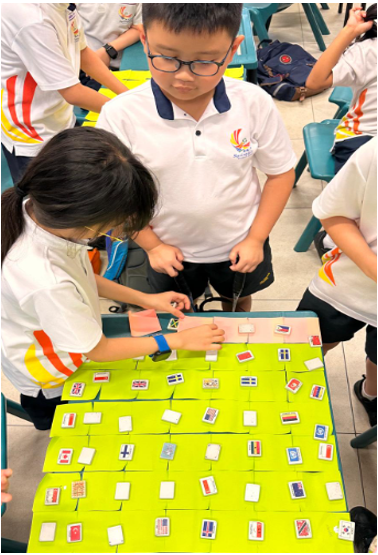
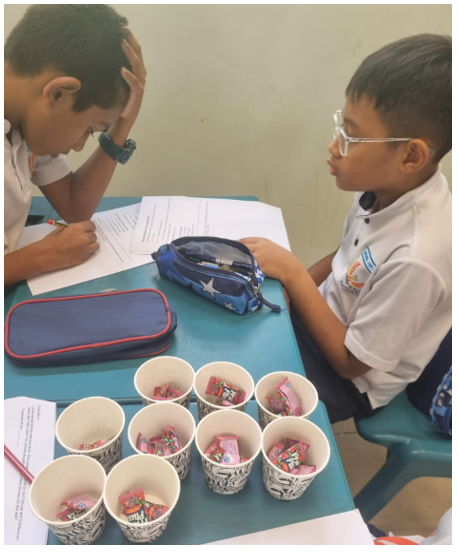
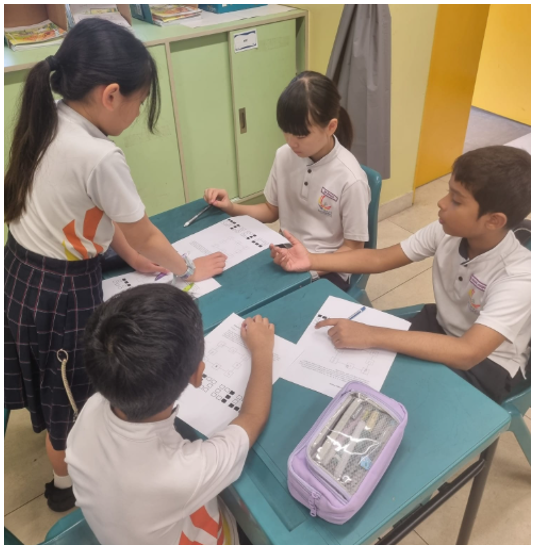
Students engage in exploratory problem-solving experiences that allow
them to notice patterns, make sense of unfamiliar situations, and gradually
develop foundational strategies in ways that help them thrive as young
mathematical thinkers. These exploratory tasks grow in complexity across
the levels and are closely connected to the topics they learn. Students
deepen their reasoning through rich, open-ended problems that encourage
them to discover and apply a range of thinking skills and heuristics. Rather
than being explicitly taught first, students uncover these strategies through
guided exploration, reflection, and discussion, enabling them to thrive
in tackling non-routine and higher-order questions with greater independence
and confidence.
|
|
|
|---|
Students work collaboratively and explore different methods of finding solutions to the given task.
Learning Support for Mathematics (LSM)
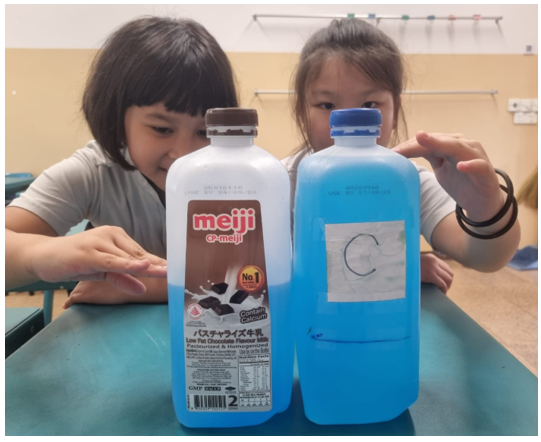
LSM is designed to provide early and targeted support for selected Primary
1 to Primary 4 students who need additional support in numeracy, to strengthen
their basic skills and build a strong foundation in mathematics. In a small,
focused group led by trained LSM teachers, these students will experience
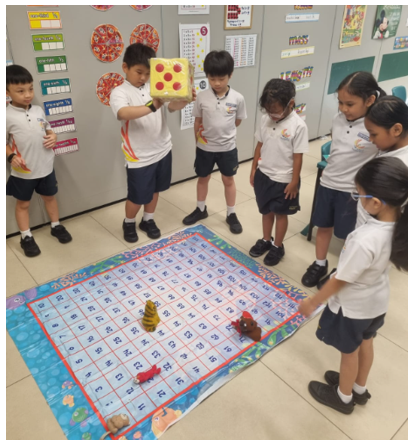
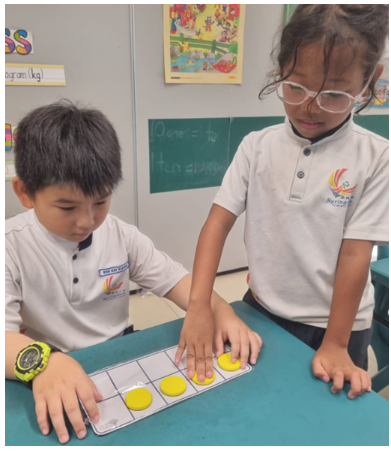
the joy of learning through play and hands-on activities. These engaging
sessions allow students to achieve successes step by step, helping them
build confidence and develop positive attitudes toward Math.
|
|
|
|---|
Students use manipulatives to demonstrate their understanding, making learning more concrete, hands-on, and meaningful.
E2K(Mathematics) & Math Olympiad Programme
Through the Mathematics E2K and Math Olympiad Programme, students with
aptitude in Mathematics are stretched to explore advanced concepts and
challenging problems, nurturing them to thrive as confident, reflective,
and self-directed mathematical thinkers who can apply their abilities to
make meaningful contributions beyond the classroom. These are the Math
Olympiad Competitions which we participate in:
-
Singapore Mathematical Olympiad for Primary School by Hwa Chong (SMOPS) – P6
-
Singapore & Asian Schools Math Olympiad (SASMO) – P5 & P6
-
National Mathematical Olympiad of Singapore by NUS High (NMOS) –P5
|
|
|---|
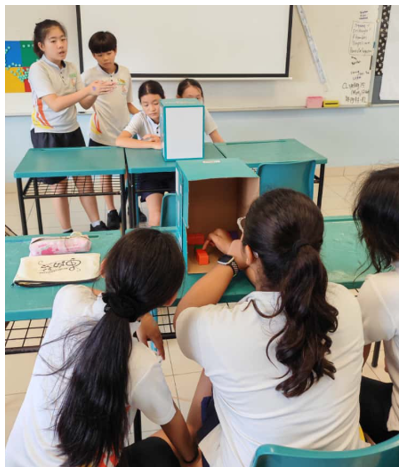
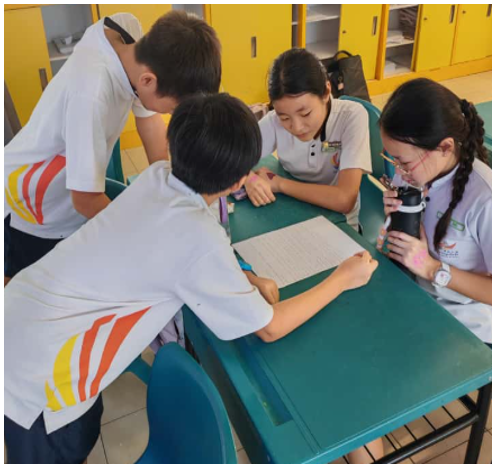
Deep thinking in action! Students engage in E2K activities that challenge them to explore and reason.
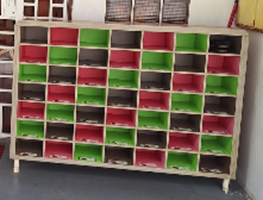
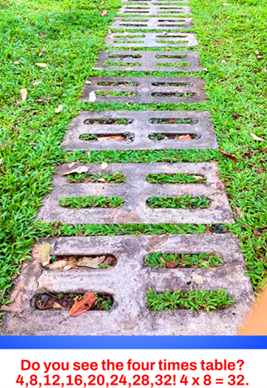
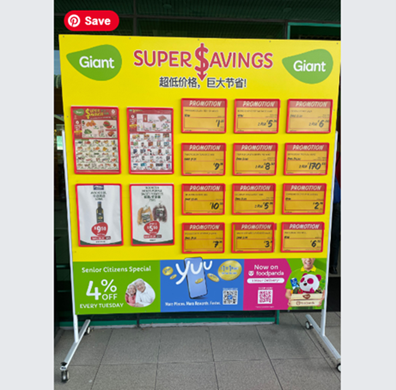
Eye Spy Math Around Me Competition
The Eye Spy Maths Around Me competition encourages students to explore
and recognise mathematics in their daily surroundings, blending math with
creativity to help them thrive as observant, innovative thinkers who appreciate
the real-world impact of mathematics.
|
|
|
|---|
Creative minds at work! Our students used imagination and Maths to bring their ideas to life in this competition.
Mathematics Comes Alive @ Springdale
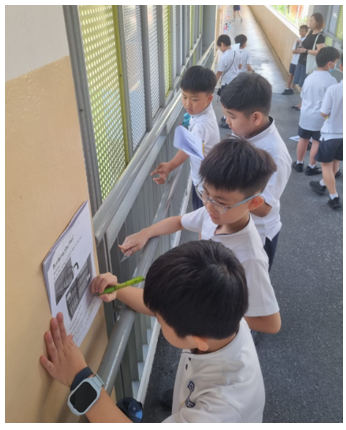
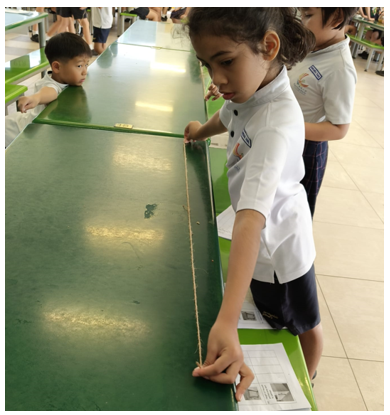
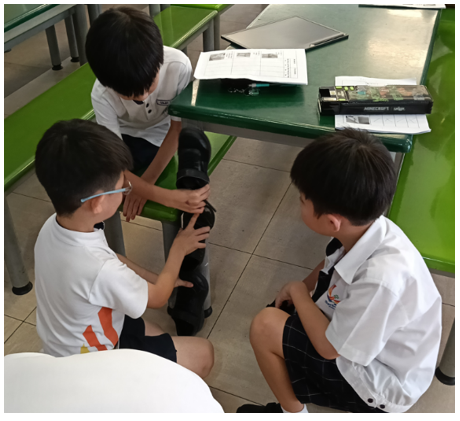
At Springdale Primary, Mathematics comes alive through our Lower Primary
Math Trail, where students explore meaningful, hands-on activities that
connect mathematical ideas to the world around them. As they navigate real-life
scenarios, observe patterns, and solve engaging challenges, our young learners
discover that math is not just a subject but a vibrant part of everyday
life. Through this experiential learning, students thrive as curious, confident
mathematical thinkers who find joy in inquiry and develop the foundations
needed to make a positive difference in their learning journey and beyond.
|
|
|
|---|
Math is everywhere… and our students found it!
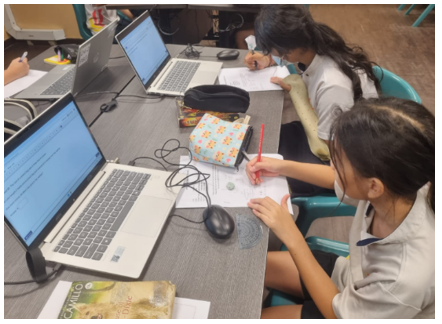
P2 & P4 MathsCheckPlus /P5 & P6 CATalytics
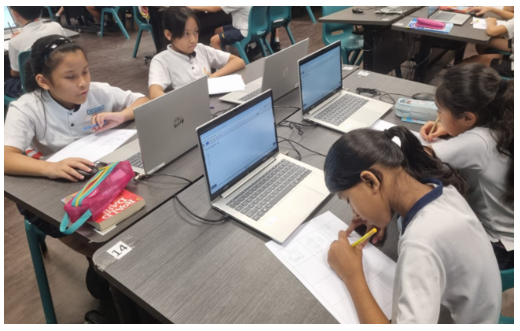
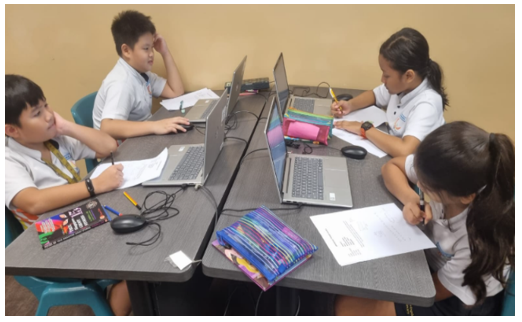
The school conducts the P2 and P4 MathsCheckPlus, as well as the P5 and
P6 CATalytics, which are SEAB-designed online assessments providing valuable
insights into students’ mathematical understanding. The results from these
assessments are closely analysed to identify learning gaps and areas where
students may need additional support. Given that Mathematics follows a
spiral curriculum, these findings are especially critical, as early misconceptions
can affect learning in later levels. The information gathered enables teachers
to implement timely and targeted interventions, ensuring that students
strengthen their foundational understanding as they progress through the
mathematics curriculum.
|
|
|
|---|
Students practise with purpose, while teachers use the data to tailor interventions and strengthen learning