
Cyberwellness
Help your child stay safe and responsible online. Find out what Cyber Wellness topics are taught at each primary level from online safety basics to spotting scams and false information
Cyber Wellness is the ability of our children and youth to navigate the cyberspace safely.
This is done through our Character and Citizenship Education (CCE) curriculum which aims to:
Equip students with the knowledge and skills to harness the power of Information and Communication Technology (ICT) for positive purposes;
Maintain a positive presence in cyberspace; and
Be safe and responsible users of ICT.
Through the curriculum, your child learns knowledge and skills to have balanced screen use, be safe online, and exhibit positive online behaviours.
Primary 1 & 2
Basic online safety rules
Talking to only people you know
Cyber Contacts
Understand that the profiles of strangers that we see online may not be their real identities
Recognise the dangers of chatting with strangers online
Importance of a balanced lifestyle
Protecting personal information
Understand the risks of disclosing personal information
Primary 3 & 4
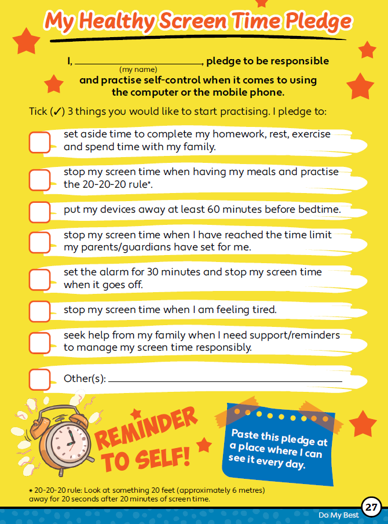
Balanced use of digital devices
Time management and spending time on screen-free activities
Netiquette
Show respect to others online
Be considerate when posting opinions online
Reflect on how our interactions can affect others online
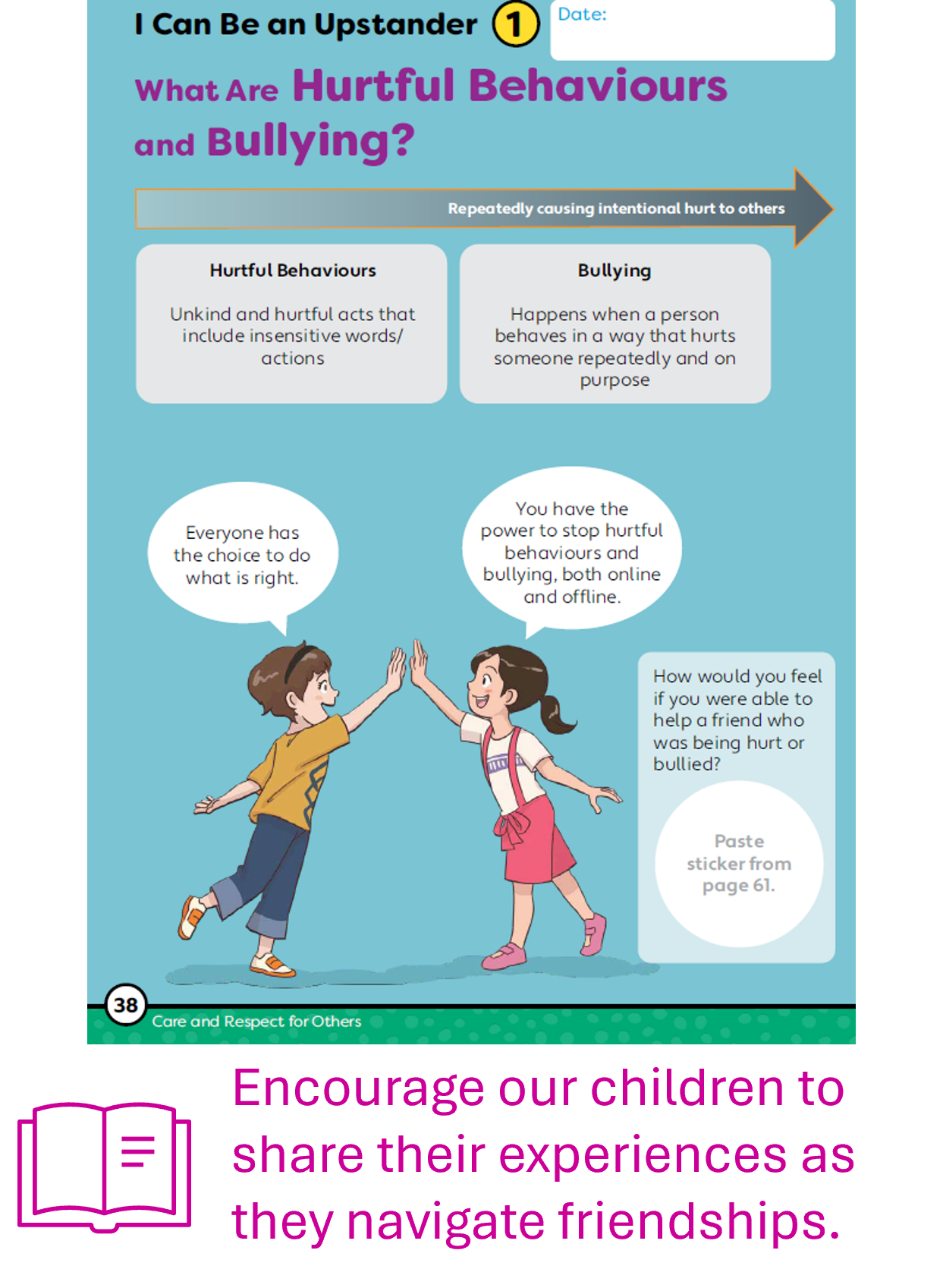
Stand up against cyber bullying
What to do when encountering cyber bullying
How to speak up and stand up against cyber bullying
How to stay safe online
Steps to take to determine if an online friend is trustworthy
Primary 5 & 6
Be a positive peer influence online and manage digital footprints
Speak up and stand for what is right regardless of peer pressure
Seeking help from trusted adults/sources when needed
Awareness of permanence of online data and review privacy settings
Importance of cybersecurity
Protect oneself from phishing, spam, scams and hacking
How to verify online falsehoods
Use S.U.R.E.* to verify information online
Staying Safe from Pornography
Understand the impact of pornography on themselves and others
Reject pornographic content using the ‘Stop-Think-Do’ strategy.
Know that keeping, selling, sharing or forwarding pornographic materials is an offence