Music
Explore how Springdale Primary's Music curriculum builds skills in listening, creating, and performing, helping students develop creative expression and a lifelong love of music.
Aims of Music Education
a. Acquire and apply musical skills, knowledge and understanding through Listening, Creating and Performing
b. Develop abilities for creative expression and communication
c. Develop an understanding and appreciation of music in local and global cultures
d. Cultivate a life-long enjoyment and involvement in music.
Music Curriculum Concept
The Primary Music curriculum seeks to develop musical understanding through 3 Musical Processes of Listening, Creating and Performing. As illustrated below, the 3 Musical Processes are core to the Music Curriculum Concept and inter-related and inter-dependent in practice.
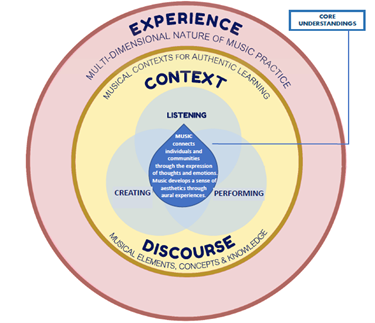
The display of musical processes draws on students’ learning and understanding of musical elements and concepts during their musical exploration.
Learning Experiences
At Springdale Primary School, students develop their musical capacities to express themselves while deepening their understanding of musical elements and concepts throughout the year. To achieve the aims of Music Education, the syllabus is structured across three key stages from Primary 1 to 6, with each stage comprising two levels that build progressively on prior competencies. The expected knowledge and skills for each stage are outlined in the Learning Outcomes (LOs), which are addressed through a spiral progression of learning. This approach ensures that elements and concepts are revisited and reinforced through active musical experiences such as music creation, performance, and movement in music.
Listen and Respond to Music
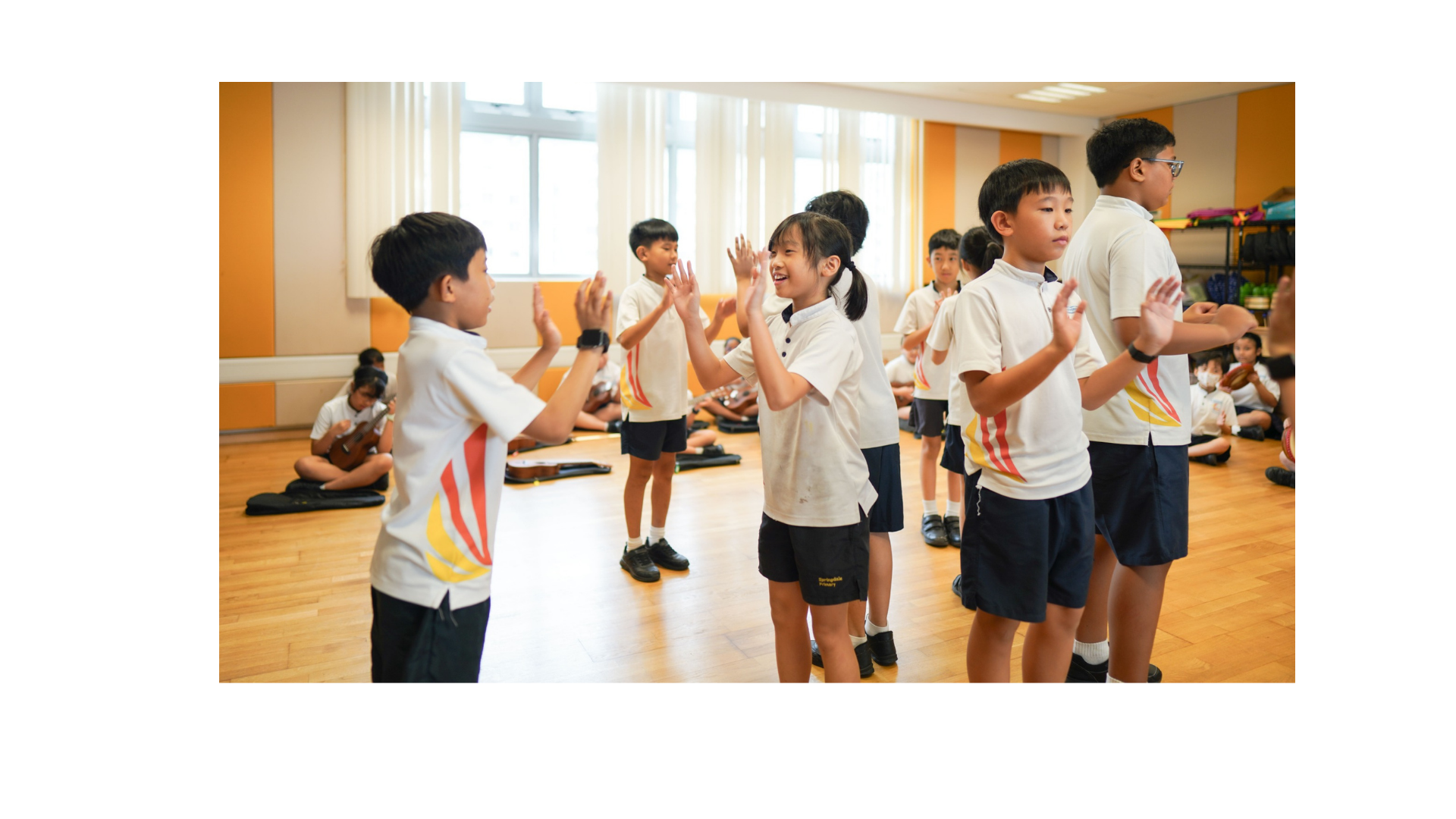
Create Music in both vocal and instrumental settings, individually and collaboratively
Perform Music in both vocal and instrumental settings, individually and collaboratively where students respectively:
A. Sing
B. Play Instruments
Musicable @ SDPS App: Musicable@Springdale App (opens in new tab)